
Introduction
Tossing and turning at night? You’re not alone. A lack of sleep is one of the problems that plague millions of people, causing them to become exhausted, experience brain fog, and become irritable in all spheres of life. The good news is that you do not have to spend a lot of money on the costly supplements and prescription drugs to adjust your sleep pattern. By adopting 7 simple habits for better sleep, you can naturally reset your internal clock and wake up feeling refreshed. These are the evidence-based strategies that do not act against the natural rhythms of your body. This guide will teach you simple habits that you can easily adopt in your daily life and change your nights and days in a way that is not complex and does not require any special equipment.
Table of Contents

Understanding Your Sleep Schedule
The circadian rhythm is a 24 hour internal clock of your body. This biological mechanism is what determines when you are awake or when you are sleepy. It depends upon the light, temperature and regular habits.
Disruption of the circadian rhythm is a calamity to everything. You may end up staying up late at 2.00 am or inability to remain attentive in crucial meetings. The typical symptoms are problems with falling asleep, frequent wake ups, feeling groggy in the morning and having to use several alarms in order to wake up.
The good news? Your sleeping habit is not permanently disturbed. Using studies, research findings have indicated that most individuals have been able to alter their circadian rhythm after two or four weeks with a lot of effort. The trick is to work with your natural inclinations of the body and not the contrary.
1. Wake Up at the Same Time Every Day
Healthy sleep is based on consistency. Your body is demanding some predictability and a regular wake time is one of the most effective signals that your internal clock can get.
By waking up at the same time every day, your body gets to know when to secrete the hormone cortisol (the hormone that makes you wake up) and when to secrete the hormone melatonin (the hormone that makes you sleep). This is a natural rhythm, which with time, will become automatic. Yes, this means weekends too. Saturday sleeping may feel good in the moment but it develops social jet lag, which interferes with the whole week.
Alarm you set at the same time, and even in case of going to bed late at night. This may be something that is hard in the beginning, but your body will get used to it. In a week or two, you will probably begin to wake up on your own and not use your alarm. Your circadian rhythm coming into harmony.
In case there is a dire need to sleep, you should only get up on weekends an hour or two later than on weekdays. Beyond that, and you are just putting yourself in a state of jet lag without even getting out of bed.
2. Get Morning Sunlight within 30 Minutes of Waking
The alarm clock of nature is the sunlight. As soon as your eyes receive a lot of light in the morning, it initiates a series of biological events that stimulate your whole system to get up.
Exposing the body to morning light deactivates production of melatonin and stimulates cortisol and serotonin. This mixture perhaps makes you feel alert and energetic. More to the point, it will give you a time this evening to release your melatonin, and you will find yourself getting the urge to sleep later in the evening.
Take a walk of 10-15 minutes during the first hour of the day. The greatest light is in the direct sunlight, and even cloudy days have sufficient light to give your brain signals. In the case of early waking, before sunrise, or dark climate, a light therapy lamp (10,000 lux) during having breakfast is recommended.
Don’t skip this step. Among the most effective natural sleep aids there is morning exposure to light, and that is free as well.
3. Limit Caffeine after 2 PM
Coffee lovers, listen up. Your afternoon pick-me-up could be undermining your sleep even though you are not aware of it.
Caffeine half life is approximately six hours. This implies that when you take coffee at 4PM, half of the caffeine remains in your body even at 10PM. In as much as you may be able to fall asleep after late caffeine, it interferes with your deep sleep patterns, and you have not rested.
Set 2 PM as your caffeine limit. When you are ready to get a boost in the afternoon, you can use the following substitutes: a brief walk in the air, a cold water glass, some gentle stretching, or a snack consisting of protein. A lot of individuals find that they were just feeling fatigued because they were dehydrated or needed to move around and not consume more caffeine.
In the case you are highly addicted to caffeine, slow down. Reduce by 1 cup every week to prevent withdrawal headaches. As soon as you will sleep better, your energy level will also stabilize.

4. Create a Digital Sunset
The screens produce blue light that misleads your brain to believe that it is day time. This stifles the production of the melatonin just at the time when you need it the most.
Create a digital night before going to sleep one or two hours before bedtime. This will imply that no phones, tablets, computers, or television during this window. Yes, it is difficult to believe in our globalized world, but the sleep perks are amazing.
Before scrolling, you could read a hard copy book, journal, do some light yoga, talk with a loved one, plan your outfit tomorrow or meditate. These activities relax your nervous system as opposed to invigorating it.
In case you have no alternative but to use screens, enable night mode or use blue light blocking glasses. But these are concessions. The information that you read (news, social media, work emails) is usually thought-provoking no matter how light the background is. An actual online sunset is much more efficient.
5. Keep Your Bedroom Cool, Dark, and Quiet
The environment that you sleep in is more important than you may believe. Minor changes can result in a significantly improved rest.
Temperature is critical. When you go to sleep, your body temperature decreases. This process is facilitated by a cool room (60-67degF or 15-19degC). The vast majority of individuals sleep in over heated rooms. When you wake up sweaty or always get rid of the covers, then turn down your thermostat.
Darkness is of equal importance. The slightest light may disrupt melatonin production. Buy blackout curtains or wear an eye mask. Turn off or take out any LED lights. Your bedroom must be dark so that you can not see your hand in front of your face.
Get rid of noises using earplugs, white noise machine, or a fan. Regular background noise can conceal the disturbances such as the traffic or neighbors. There are people who consider nature sounds or brown noise particularly enjoyable.
Imagine your bedroom to be a place of sleep. It must be used only to sleep and have intimacy. Remove work materials, exercise equipment, and clutter that creates mental stimulation.
6. Develop a Relaxing Pre-Sleep Routine
A transition between day activities and sleep is necessary in your brain. Regular evening routine includes an indication of going to sleep, this is a regular practice.
Begin your habit 30-60 minutes prior to your goal bedtime. Make it easy and fun and you will get to stick with it. It is all about consistency, and one should perform the same activities, one by one every night.
Some of the best pre-sleep rituals include reading fiction (not work-related), taking a relaxing bath or shower, engaging in gentle stretching, writing in gratitude journal or listening to relaxing music. The warm bath is especially helpful since your body temperature would be lowered subsequently resembling the natural cooling effect that occurs upon entering sleep.
Nothing stimulating should be during this period. Those are heated discussions, job scheduling, payment of bills, or watching fast-paced television programs. Problem-saving to-morrow. Your evening ritual must be as dull as can be.
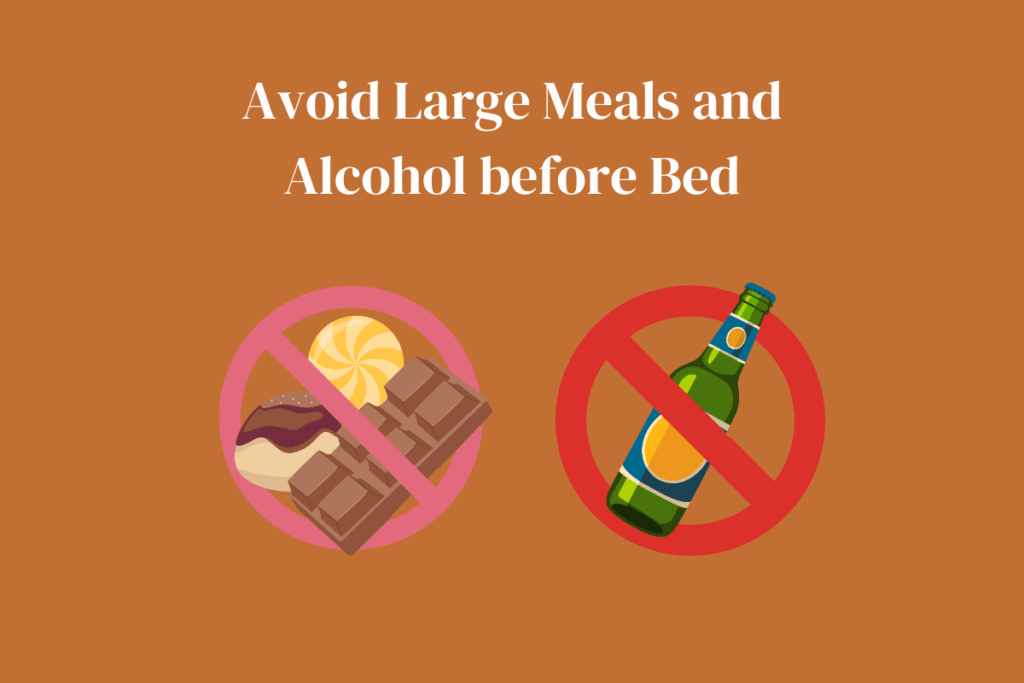
7. Avoid Large Meals and Alcohol before Bed
What one eats at night is a great determining factor of the quality of sleep. Eating and drinking late will reverse all the other good things you have followed.
A lot of digestion is involved in large meals. You have more chances to suffer acid reflux and discomfort when you go to bed with a full stomach. Intend to have dinner not later than two or three hours before going to bed. In case you are hungry, have a light bite: a handful of nuts, a banana, or yogurt.
Alcohol is also given a special consideration since most people think that it induces sleep. Alcohol may cause you to feel sleepy but it greatly affects sleep architecture. It decreases the REM sleep (the rejuvenating dream stage) and leads to waking up in the middle of the night as your body breaks it down. You may get eight hours of sleep and still feel you are not rested.
Putting It All Together
All the seven habits may appear daunting to implement at the same time. Begin as far as two or three that appear easiest and proceed.
The first week, work on regular wakefulness and daylight. It is these two habits which form the basis of the rest. Week two, include the caffeine cutoff and digital sunset. Week three, maximize your bedroom space. Week four, set up your night routine and change your eating schedule.
Keep a simple journal of your progress. Record your sleep time, time of waking up, the time that it took you to fall asleep and your level of rest. Tendencies will be formed rapidly. You may find out that missing your walk or having late coffee has drastic effects on your sleeping that night.
Be patient with yourself. There will be better nights and worse ones, particularly in the beginning. It is a matter of consistency and not perfection. Although you might have had a dismal night, do not change your wake time in the morning. It will take less time than you think to adjust your body.
Majority of the individuals see changes in the initial week with significant changes seen in week three. The more you sleep the better the effect it establishes on the other hand: you feel better during the day, you can keep your habits better, and it is easier to create a circle of positive feedback.
Conclusion
Sleep is not a luxury but a necessity in the physical health, clarity of mind and emotional wellbeing. These 7 simple habits for better sleep work because they align with your body’s natural biology rather than fighting against it. You do not require costly devices and complex systems. Regular wakefulness, mornings, minimal caffeine, screen sunset evenings, a streamlined bedroom, a soothing routine, and conscious eating are the ideal ingredients of productive sleep. Begin to make such changes this evening. In a few weeks, you will feel the transformative effect of the really great sleep. The better sleep habits are on the other side and the more energized, focused and healthier you will be. Sweet dreams!
FAQs
What is my required number of hours of sleep?
The recommended time of sleep is 7-9 hours per night. The needs of people differ depending on age, level of activity and genetic factors. As well, as long as you wake up refreshed and without an alarm, and you remain energized during the day then you are getting an adequate amount of sleep.
Am I supposed to take naps in case I did not sleep properly last night?
Naps (20-30 minutes) should be done before 3 PM and they can assist in alertness without interfering with the night time sleep. Later or extended naps may complicate what happens upon going to bed. Insomnia should be avoided when napping.
Is there anything wrong with using my phone as an alarm clock?
Being your phone your alarm adds more temptation to the urge to go through notifications before sleep and when you wake up. Take an example of a conventional alarm clock and leave your phone in a different room not to interfere with sleep.
What is the duration of restoration of a disrupted sleep cycle?
After a lot of effort, most individuals would be able to recalibrate their sleep within 2-4 weeks. Drastic changes are not as sustainable as gradual adjustments (15-30 minutes per day). Patience is important as well as consistency.
Is it possible to be in bed yet not fall asleep?
In case you are not able to fall asleep after 20 minutes, get up and engage in a quiet and relaxing activity under dim lighting until you feel sleepy. This prevents your brain from associating your bed with wakefulness and frustration.