Introduction
Do you usually hurry to school feeling disorganized and stressed? Your morning routine will either make or break your academic whole day. Students who stick to an organized morning routine are better academically, can better cope with stress and are more energetic during the day. A productive morning routine for students isn’t about waking up at 5 AM or spending hours on complex rituals–it’s about creating simple, consistent habits that set you up for success. In this article, we shall delve into the seven effective habits that can help you to transform your mornings and improve on your academic performance, whether you are in high school or college.
Table of Contents
Why Morning Routines Matter for Students
Whatever happens afterwards is determined by your morning. Studies indicate that students who developed habits of waking up early in the morning have better concentration, enhanced memory and are less anxious. By merely doing a purposeful start of your day, you are in effect training the brain to perform its functions optimally.
The science backs this up too. The part of your brain (the prefrontal cortex) that is in charge of making decisions and attention is at its peak in the morning. When you form good habits at this high point of life, you are getting the best out of your brain capacity. Lack of routine means you will probably have a first day of inconsistent, reactive and overwhelmed behavior before your first class.
Lack of a regular sleeping pattern, cramming at the last minute, and mornings are some of the difficulties that many students experience. Such trends form a stress cycle, which directly influences grades and mental health. The first step to ending this cycle is by making a single decision: to devote your mornings to your own schedule and requirements.
Habit 1: Wake Up at a Consistent Time
Your body loves consistency. As you wake up at the same time every day, even on weekends, you are relaxed with your natural circadian rhythm rather than opposing it. Such consistency will contribute to controlling the quality of your sleep so that you can easily fall asleep at night and wake up feeling refreshed.
Begin by working out when you must get up depending on your first appointment of the day. Then reverse work up to make sure that you are getting 7-9 hours of sleep. Install an alarm and leave your phone in another room, such that you will need to leave your bed to turn the phone off.
Your enemy is the snooze button. The additional 10 minutes of broken sleep really leave you grogier. Rather, be determined to rise as soon as your alarm goes off. It is hard initially, however, after a week or two, your body will be used to it and waking up would become much easier.
You may be a night owl by nature, and it will never work to wake up early the next day. Gradually change your wake up time, 15 minutes a week, until you achieve your desired time. Modernizing in small steps is long term; radical changes tend to fail.
Habit 2: Hydrate Immediately After Waking
You sleep 6-8 hours with no water in your body, and therefore, you are naturally dehydrated. Direct consequences of this dehydration include decreased concentration, memory, and mood of your brain. Taking water in the morning is like starting up your metabolism and getting rid of toxins.
Have a big glass or bottle of water in your nightstand. It should be the first thing you do before attending to your phone or any other activity. Trying to consume at least 16 ounces of water in the first 30 minutes of the day.
Other students use lemon in their water to increase the vitamin C and it has a refreshing effect. Some use room temperature water since it is not as harmful to the digestive system. Discover what works best, however, make hydration a non-negotiable fact.
You will realize the difference in days. Proper hydration will result in good morning lectures, higher energy and even cleaner skin. It is one of the easiest habits whose effects are the fastest.

Habit 3: Exercise or Move Your Body
You do not have to go on a vigorous workout in the gym to enjoy the fruits of morning exercise. Nonetheless, even 10-15 minutes of exercise enhance the flow of blood to your brain, releases endorphins, and makes you more focused in classes. Workouts are my kind of cup of coffee without the nervousness and post- lunch depression.
You can do as you please and any schedule can suit it. Do a quick yoga video on YouTube, do jumping jacks and push-ups in a room, go on a brisk walk around campus, or do some dynamic stretching. It is a matter of consistency and not intensity.
Exercise in the morning is especially effective in terms of academic stress. A morning exercise will also make you feel calm and self-confident later in the day should you have an exam or a presentation. The actual exercise literally vibrates away the nervous energy, and secures in its place a positive momentum.
Students who are not physically active should begin with five minutes. Take some stretches as your coffee is ready. Take a walk to a more distant dining room to have breakfast. Use the stairs, rather than the elevator. Minor movements result in major gains in the long run.
Habit 4: Eat a Nutritious Breakfast
Missing breakfast is a time-saving but a mental performance-robbing activity. The brain requires glucose to work the best and you have depleted the energy reserves after fasting all night. Good breakfast will keep your blood sugar levels steady, give you better concentration, and will enable you to remember more things in your morning classes.
The ideal breakfast has a combination of protein, good fats, and complex carbohydrates. Consider scrambled eggs and whole-grain toast, Greek yogurt with berries and granola, oatmeal with nuts and a banana or a smoothie with protein powder and spinach. These blends offer longer lasting energy devoid of the crash.
Meal prep is a solution to busy students. Take 30 minutes on Sunday to make overnight oats, pre-cook a dozen eggs, or pre-cook breakfast burritos. The existence of grab-and-go options not only helps to do away with the no time excuse, but also makes sure that you are powering your brain the right way.
The sugar cereals, pastries and energy drinks should not be your major breakfast. They peak your blood sugar levels and cause a crash at the time when you need it the most. When running on a tight budget, food like oat, eggs, and bananas are good sources of nutrition and can be obtained in large quantities without being costly.
Habit 5: Review Your Daily Goals and Priorities
The best leverage activity that you can engage in is to spend five minutes planning your day. By looking at your schedule, assignments, and priorities in the morning, you will develop a mental roadmap that will keep you focused and will not overwhelm you with the idea that you have too much to do.
Take a planner, phone application or a plain notebook and list down the three things you most want to accomplish on a particular day. What assignments are due? What classes do you have? What are your planned study sessions? Viewing your day as a whole will enable you to spend your time and energy in the best way possible.
Time-blocking method is extremely effective among students. Rather than a general “study chemistry,” black out 2-4 PM: Chemistry Chapter 5 practice problems in library. This particularity makes follow-through exponentially higher as you do not need to make decisions later on when the willpower is less.
Determine possible barriers in your day as well. When do you have a back-to-back, when are you going to eat lunch? How do you find time to do homework when you have evening activities? By forecasting challenges you plan solutions before they arise so that when they arise you do not need to scramble about trying to find a solution.
Habit 6: Practice Mindfulness or Meditation
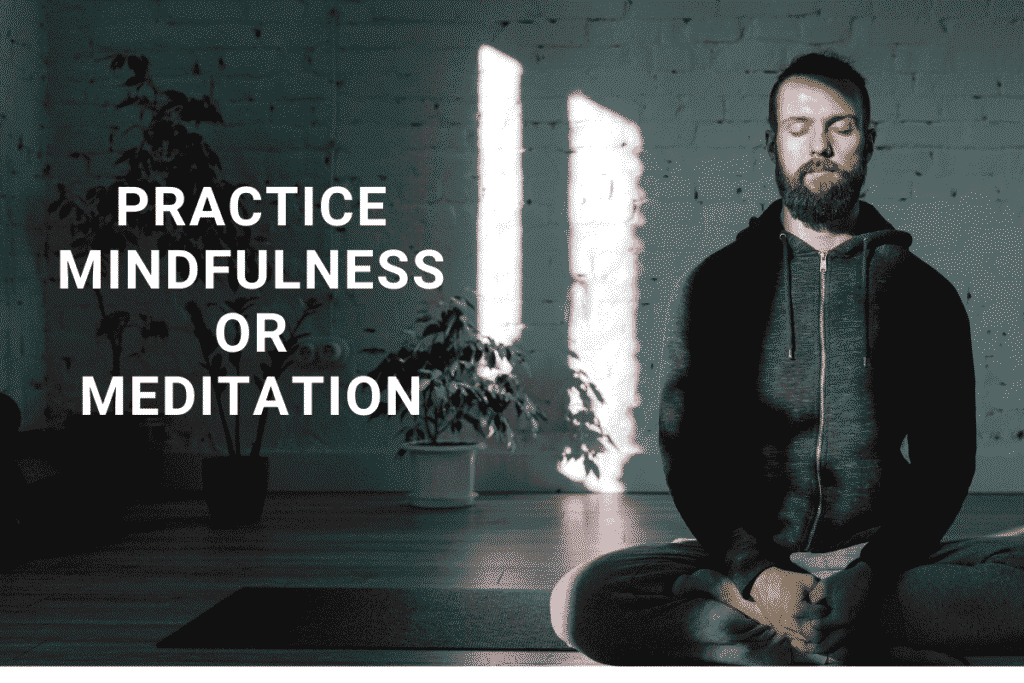
Your head is full of thoughts of assignments, social life, and future issues. This mental noise can be silenced by practicing meditation and mindfulness so that you may go about your day with more calmness and clarity. Five minutes of concentrated breathing can greatly decrease stress and increase your concentration capabilities.
One does not have to be highly experienced or spend an hour in utter silence. Begin with basic guided meditations with applications such as Headspace, Calm, or Insight Timer. Most of them have student-oriented classes on test anxiety, concentration, or relaxation. These applications render meditation convenient and simple to master.
One of the simplest methods is the 4-7-8 breathing: it is inhaled 4 times, held 7 times, and exhaled 8 times. Repeat this cycle 3-5 times. This activates you parasympathetic nervous system which causes your body to relax naturally. It is ideal before a test or a presentation.
Meditating students indicate that they sleep better, have better emotional control, and perform higher in school. The practice alters literally your brain, making it stronger in areas of your brain, which are assisting in attention and weaker in areas of stress and anxiety. It is an exercise of the mind.
Habit 7: Avoid Social Media and Phone Distractions
You are a slave to your mornings the moment you look on Instagram, Tik Tok, or text messages. The matter of social media is meant to be attractive and is capable of causing dopamine releases hence it is very hard to get away. It may be only a moment to check but as usual, it takes 30-60 minutes and you feel anxious or distracted.
Your first hour of the day should not be dedicated to highlight reel and issues of other people. Turn your phone on Do Not Disturb and do not listen to the temptations to check your notifications before you complete your morning routine. This barrier shields your mind and vitality.
You can use that time instead on habits, which actually support your goals: You may read a chapter in a textbook, go through flashcards, listen to an educational podcast, or just have your breakfast mindfully. Such activities prepare your mind to learn and not passively consume.
In case you feel like you can not work without your phone, a 30 day experiment can be useful. Majority of students are astonished about the fact that they feel calmer and more focused when they postpone the use of phones. The confirmation of the outside and the noising of the digital can be postponed–not your academic success.
Creating Your Personalized Morning Routine
The time of every student is not the same and that is why your routine must correspond to your particular situation. A commuter student who has a 8 AM class will have needs that are not the same as a student living on campus and whose start is 10 AM. These seven habits simply need to be adjusted to your lifestyle, and not trying to be like who you want to be.
30-Minute Quick Routine (for rushed mornings):
- Wake up consistently (5 min)
- Drink water (1 min)
- Quick stretches (5 min)
- Fast breakfast like a smoothie or yogurt (10 min)
- Review daily schedule (5 min)
- Deep breathing exercises (4 min)
60-Minute Ideal Routine:
- Wake up consistently (5 min)
- Hydrate (2 min)
- Light exercise or yoga (15 min)
- Shower (10 min)
- Nutritious breakfast (15 min)
- Review goals and plan day (8 min)
- Meditation or mindfulness (5 min)
90-Minute Comprehensive Routine: All preceding, but allows time to read, journal, additional time to study or a longer exercise. This is effective towards those students who have subsequent classes or study in the morning.
Keep in mind that with early classes, there is a need to wake up earlier, but the routine is an identical one it is just condensed. Night owls who are attempting to change to morning routines are encouraged to be patient of themselves and change slowly. Commuter students may do an array of things in the process of commuting such as meditation, reviewing of notes or eating a breakfast.
Common Challenges
The most usual objection is the I am not a morning person. The truth? People who are morning-people are not born they are made through habits. You make your body what you schedule it to be. Begin with a single or two habits and proceed with it. Progress beats perfection.
Studying late affects the morning routines, albeit some times it cannot be avoided. At least keep your wake up time and hydration habit going on these nights. A routine that is even shortened is better than none. And the following day, get back to regular schedule without any regrets.
When you are taking exams, it is even more important to have a routine. The habits will decrease stress and enhance cognitive abilities precisely when you require them the most. Take it as a non-negotiable self-care that has a direct influence on your test performance.
Roommate issues are important especially in the dorms. Share your morning goals and reach an agreement. Wear a sleep mask and earplugs in case of necessity. Quite a number of roommates admire early morning quietness after you clarify your academic objectives.
Tracking Progress and Building the Habit
It requires time to form habit- studies indicate that it requires between 21 and 66 days to form habit according to the level of complexity. Achieve your success with the help of an app such as Habitica or Streaks, or just make a checkmark on the calendar when you achieve success. There is no greater motivation than seeing your streak increase.
Begin with two or three habits of this list. Learn those first and then another. Attempting to change your whole morning routine at the same time is a sure way to burn out and quit. Wins always help in building momentum and confidence.
Celebrate milestones. At the end of the first week of consistency, give yourself a reward, something important, a favorite snack, a study break that involves a hobby that you love, a little thing you have always wanted to buy. Habits of positive reinforcement are reinforced.
Find an accountability partner such as a roommate, friend or study group member that is also working on getting up in the mornings. Send text to each other to check that you have done your routine. This is outside responsibility, which makes your chances of success high.
Attain adaptability and adapt. In case meditation does not feel good, journaling can be used instead. Suppose exercise in the morning is not successful, have afternoon walks. You should not feel that you are being forced to do your routine. Pay attention to your body and change accordingly.
Conclusion
Building a productive morning routine for students doesn’t require perfection or hours of free time–it requires intention and consistency. These seven habits combine with each other to maximize your brain and lessen stress and generate momentum that will push you through the whole academic day. Begin with one or two habits which you feel most at home with and then gradually create your ideal routine. It is important to remember that not all successful students are more intelligent or talented but more consistent with the principles that underline the best performance. Your mornings are too precious to be lost at turmoil and response. Before you control your academic achievements, you have to control your first hour. It is always best to start yesterday; the second-best place would be tomorrow morning.
FAQs
What time should students wake up?
The majority of the students are to get up 1-2 hours before the first engagement so that the morning routine would not be rushed. It is not the time but rather consistency that is required, waking up at the same time every day and even on weekends is the most important.
How long does it take to form a morning routine habit?
It has been found that on average, it takes 66 days to develop a new habit; however, the development of simple habits can be quicker. Always remember to start with 2-3 habits and to practice the same every single day at least, 21 days until you can incorporate more habits in your routine.
What should I eat for breakfast as a student?
The optimal student breakfast meals are made up of protein, healthy fats, and complex carbohydrates: eggs and whole grain toast, Greek yoghurt and fruits and nuts, oatmeal and peanut butter, or protein powder smoothies. Energy crashes are caused by sugary cereals that should be avoided.
Can I still have a morning routine with 8 AM classes?
Absolutely. Rise between 60-120 minutes before school and go through a curtailed routine. Even 30 minutes of hydration, rapid movement, breakfast, and planning would go a long way in regard to your concentration and your energy levels.
Should I exercise before or after breakfast?
This is based on the individual preference. Other students have exercised better when they are on an empty stomach (fasted cardio) and others require something to eat before exercising. Test to determine what provides you with the maximum energy and does not lead to a state of digestive unease when exercising.